
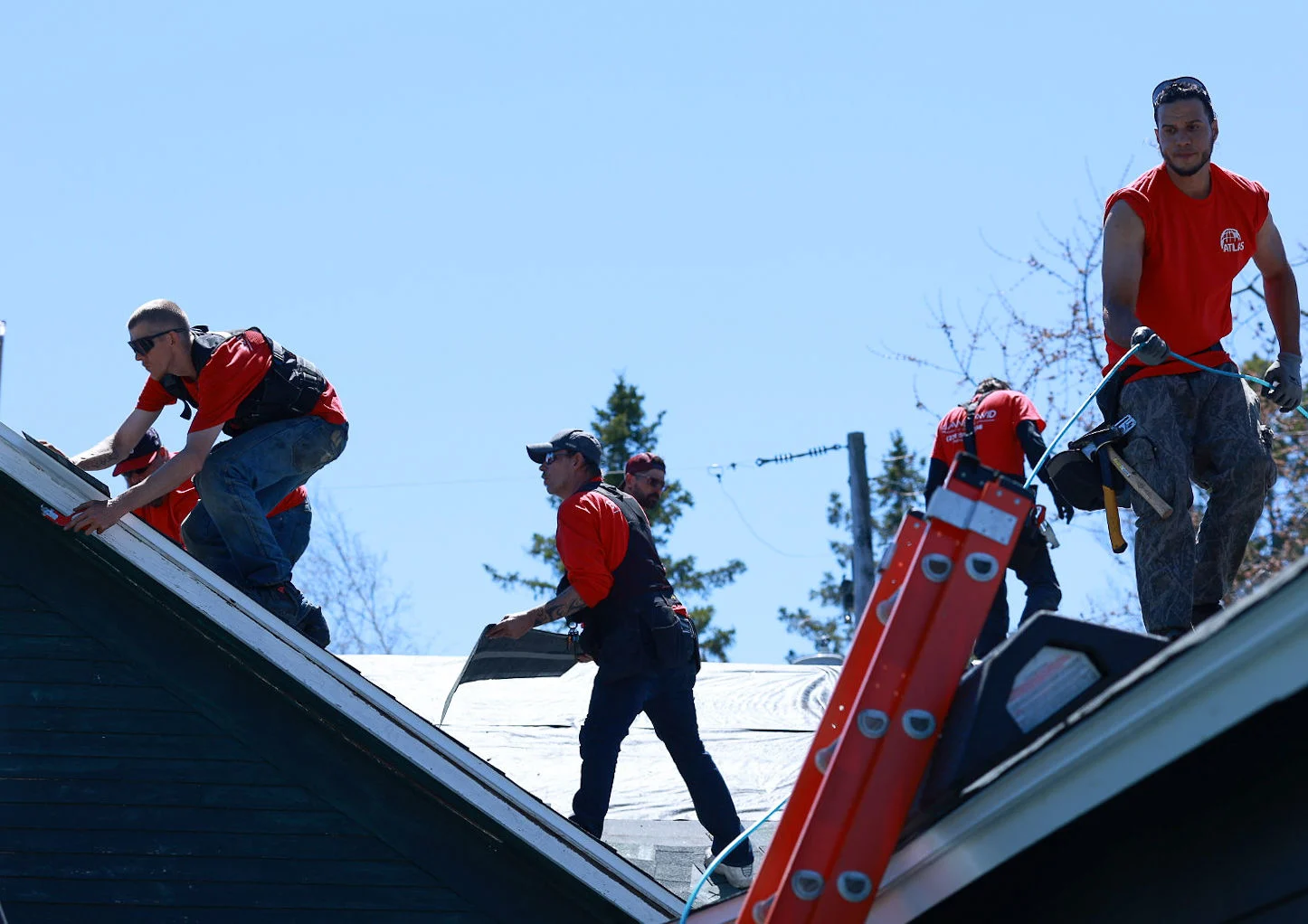
People ask us this all the time. A metal roof costs more than shingles up front, so is it worth it? In most of the country, that’s a real debate. In Northern Michigan, it’s barely a debate at all. Here’s the honest version, from a crew that installs both, with the numbers behind it.
Start with what our winters actually do
Petoskey averages 123.6 inches of snow a year, and Cheboygan gets about 87.6, based on NOAA 30-year climate data. Those are averages, not a bad winter. Harbor Springs sits in the same lake-effect belt coming off Lake Michigan, and anyone who has shoveled a driveway there in January knows the snow doesn’t arrive gently and doesn’t leave quickly.
Now put that on a roof. Packed or wet snow can weigh 20 pounds or more per square foot, which is why FEMA publishes an entire snow load safety guide about it. A foot of heavy snow on a 2,000-square-foot roof is on the order of 20 tons. Add a freeze-thaw cycle that runs November through April, plus the ice dams that form at every eave where attic heat melts the bottom snow layer, and you have the environment your roof actually lives in. Shingle warranties are written for the national average. Your roof doesn’t live in the national average.

How long does a metal roof actually last?
A properly installed standing seam metal roof lasts 40 to 70 years, and many go longer. An asphalt shingle roof is sold as a 25-to-30-year roof, but in our climate it’s realistically a 15-to-25-year roof, because ice dams, snow load, and constant freeze-thaw age shingles faster than the brochure says.
So the real comparison isn’t one metal roof against one shingle roof. It’s one metal roof against two or even three shingle roofs, plus the tear-offs, plus disposal, plus whatever water damage sneaks in between roof number one and roof number two. Resale tells the same story: a metal roof can add several percent to a home’s value, and buyers shopping lake homes around Petoskey and Harbor Springs increasingly ask for metal by name, because nobody wants to re-roof a second home they only see in summer.
If this is your forever home, or a cottage staying in the family, that math usually favors metal by a wide margin. If you’re selling in three years, shingles might still make sense. We’ll tell you either way.
Why standing seam wins in snow country
Standing seam means the panels run in one piece from ridge to eave, joined at raised seams that stand above the water line, with every fastener hidden beneath the panel. That design matters here for four reasons. Snow slides off instead of sitting on your trusses for four months. Ice dams can’t get in, because there are no exposed shingle edges or fastener holes for backed-up water to find. Wind can’t lift it, since gusts that crease and tear shingle tabs do nothing to a mechanically seamed panel. And nothing about it needs you: no spring shingle check, no blown-off tabs after a storm, no wondering what’s happening at the lake house while you’re downstate. For seasonal homeowners, that last one is the whole argument.
Not just houses: ag metal for barns and outbuildings
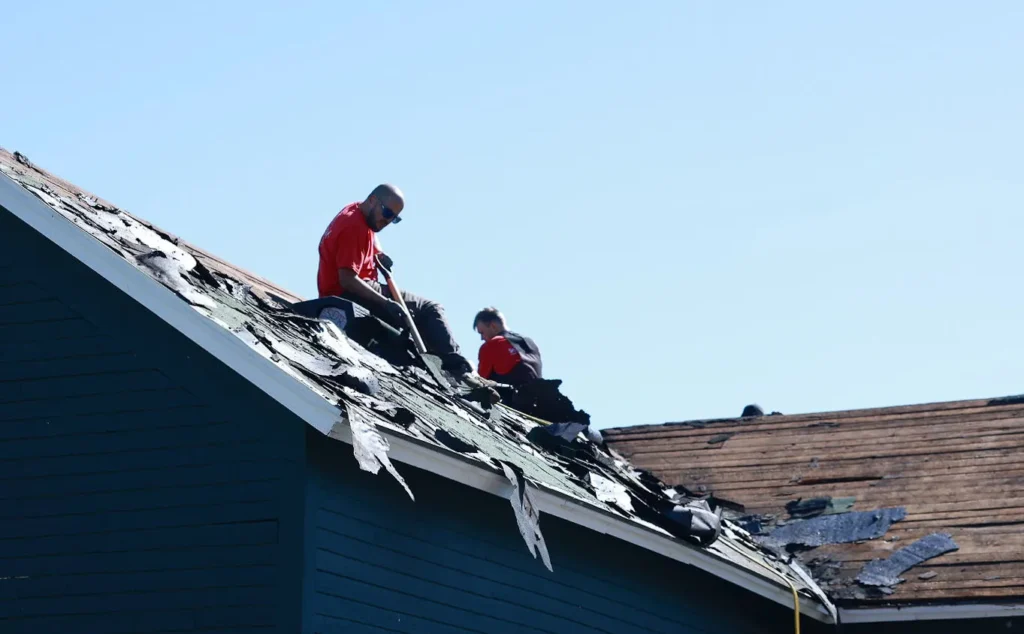
The same logic runs through pole barns, machine sheds, and outbuildings. Ag panel is the workhorse version of metal roofing: durable, fast to install, and made to span purlins on big, simple roofs. If your barn roof is rusting through from winter condensation or your shingled garage is on its last season, a metal re-roof is usually the last roof that building will ever need. We do these year-round from Cheboygan to Charlevoix, and we honestly prefer them as cold-weather jobs, because frozen ground means our equipment doesn’t rut up your yard or field the way it would in April mud.
The worries that aren’t real
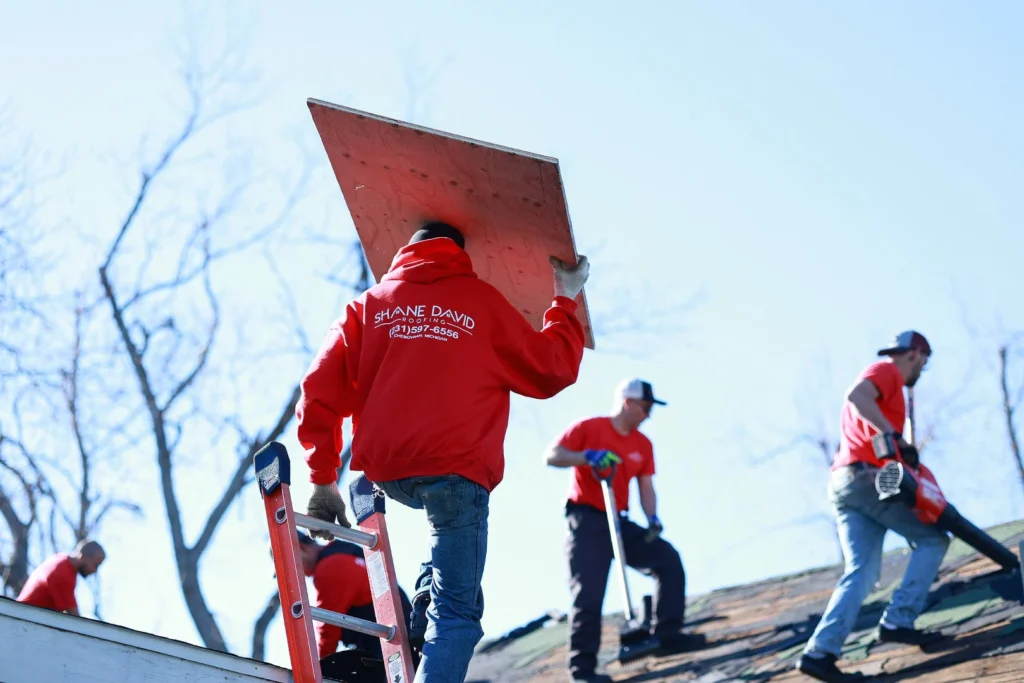
Is a metal roof loud in the rain? Not on a house. Over solid decking, underlayment, and insulation, it’s about the same as shingles. The tin-roof drumming people remember comes from open-framed barns with nothing under the panel. Does it attract lightning? No, and metal is noncombustible besides. Will snow avalanche onto the deck? Snow does slide, and we plan for it. Snow guards go above doors, walkways, and propane tanks. Can you install it in winter? Yes, and this is where metal quietly wins the calendar. Asphalt shingles rely on a self-sealing strip that manufacturers like GAF say needs warm temperatures and sun to activate, which is why shingles installed in January can sit unsealed until spring. Standing seam is mechanically fastened and mechanically seamed. A panel locked down at 15 degrees is exactly as tight as one locked down in July.
Get a real number instead of wondering
The only way to know what metal costs on your roof is to have someone measure it and quote it. We’re Shane David Roofing, and metal roof installation is what we do all winter across Northern Michigan, including Petoskey, Harbor Springs, and Cheboygan. The quote is free and the answer is honest, even when the answer is “keep the roof you have.”
Call 231-597-6556 or request a quote online, and let’s put a real number on it.

You must be logged in to post a comment.